
 Situs Web Utama

How to Choose the Right Bulldozer for Earthmoving
Choosing the right bulldozer for earthmoving requires more than comparing horsepower or purchase price. The machine should match the application, ground conditions, workload, and expected working hours. Factors such as operating weight, blade type, undercarriage configuration, and fuel efficiency can also affect productivity and operating costs.
A machine that is too small may struggle to deliver the required productivity, while an oversized machine can increase fuel, transportation, and operating costs. The right choice therefore starts with understanding the work and conditions the machine will face.
In this guide, we will walk through the key steps for choosing a bulldozer, from evaluating applications and working conditions to selecting the right configuration and considering long-term operating costs. We will also explain how TDER's new bulldozer solutions can match different earthmoving requirements.
1. Quick Answer: How do you choose the right bulldozer?
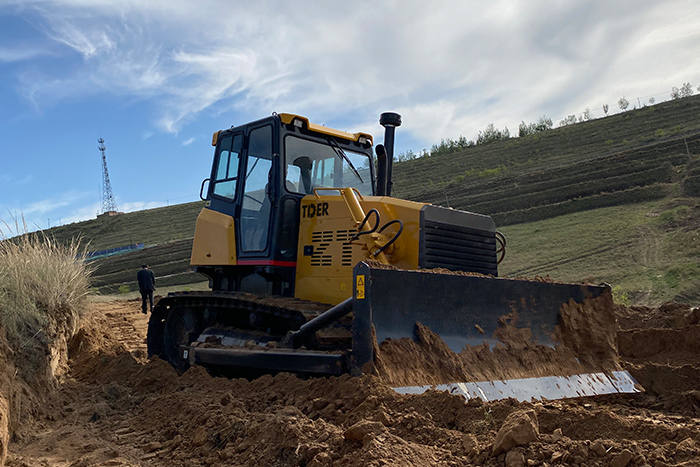
The right bulldozer for earthmoving is determined by the application, ground conditions, required productivity, and working distance. A crawler bulldozer can be a suitable choice when strong traction, stability, and performance on uneven or soft ground are important.
To choose the right machine:
- Define the application — determine whether you need the bulldozer for land clearing, site preparation, road construction, grading, or other earthmoving work.
- Evaluate the working conditions — consider soil type, terrain, slopes, ground pressure, and traction requirements.
- Select the configuration — match machine size, blade type, undercarriage, operating weight, and engine power to the workload.
- Compare operating costs — consider fuel consumption, maintenance, undercarriage wear, spare parts, and after-sales support.
2. Key Takeaways: What should you check when comparing bulldozers?
When comparing bulldozers for an earthmoving project, focus on the factors that affect productivity, machine performance, and long-term operating costs:
- Application: Match the machine to the type of earthmoving work.
- Ground Conditions: Consider soil, terrain, slopes, traction, and ground pressure.
- Machine Size: Match operating weight and blade capacity to the workload.
- Configuration: Select the right blade, undercarriage, and key specifications.
- Operating Costs: Consider fuel, maintenance, wear parts, spare parts, and after-sales support.
3. What Do You Need the Bulldozer to Do?
Before choosing a bulldozer, define the type of earthmoving work the machine needs to perform. Different applications place different demands on blade capacity, traction, operating weight, maneuverability, and pushing performance, so the right configuration depends on the job rather than a single specification.
Land Clearing
For land clearing, a bulldozer may need to remove vegetation, roots, loose soil, and surface debris. Traction, blade strength, and operating weight are important when working on uneven or undeveloped ground.
Site Preparation
Site preparation typically involves clearing, stripping topsoil, moving soil, and preparing the ground for construction. A versatile bulldozer with suitable blade capacity and good maneuverability can handle repeated pushing and leveling work efficiently.
Road Construction
Road construction often requires moving and spreading large amounts of soil or aggregate, forming roadbeds, and maintaining the required grade. Blade control, operating weight, traction, and pushing distance should therefore be considered together.
Grading and Leveling
For grading and leveling, precise blade control and maneuverability become more important. The bulldozer should be matched to the required working accuracy, material conditions, and size of the working area.
Mining and Heavy Earthmoving
Heavy-duty earthmoving and mining applications may require higher operating weight, stronger traction, greater blade capacity, and durable undercarriage components. These requirements can justify a larger bulldozer when the workload and site conditions demand higher pushing capacity.
Once the application is clear, the next step is to evaluate the ground and working conditions.
4. What Are Your Ground and Working Conditions?
Once you know what the bulldozer needs to do, evaluate the ground and working conditions where it will operate. Soil type, terrain, slope, moisture, and working space can affect traction, ground pressure, stability, and undercarriage wear, making them important factors when choosing the right bulldozer.
Soft or Wet Ground
Soft soil, mud, and wet ground can reduce traction and increase the risk of machine sinking. A crawler bulldozer can be suitable for these conditions because its tracks distribute the machine's weight over a larger contact area and provide strong traction.
Hard or Rocky Ground
Hard-packed soil, rocks, and compacted materials require strong pushing performance and durable undercarriage components. Operating weight, engine power, blade strength, and track durability should be considered together rather than selecting a machine based on horsepower alone.
Slopes and Uneven Terrain
When working on slopes or uneven ground, stability and traction become particularly important. The bulldozer should provide sufficient operating weight and track contact with the ground while maintaining effective blade control.
Long Pushing Distances
If material needs to be pushed over longer distances, productivity depends not only on blade capacity but also on operating weight, traction, engine power, and travel performance. A machine that can maintain stable pushing performance under the actual site conditions can improve overall efficiency.
Before selecting a specific machine, combine these ground conditions with your workload and productivity requirements to determine the appropriate bulldozer size and configuration.
5. How to Choose the Right Bulldozer Configuration?
After defining the work and working conditions, the next step is to translate those requirements into a suitable bulldozer configuration. The main decisions are machine size, blade type, undercarriage, and key specifications.
A practical selection process is:
Workload → Machine Size → Blade → Undercarriage → Specifications
The goal is to build a configuration in which these components work together, rather than choosing a bulldozer based on one specification alone.
How Do You Choose the Right Bulldozer Size?
Choose the bulldozer size according to the required workload, material volume, pushing distance, and expected productivity. Operating weight and blade capacity should be considered together with engine power.
For medium-scale earthmoving, a medium-size bulldozer can provide a balance between working capacity, maneuverability, and transportation requirements. For projects with high material volumes, long pushing distances, or demanding continuous earthmoving, a big bulldozer can provide greater working capacity through higher operating weight and larger blade capacity.
When comparing different sizes, focus on:
- Operating weight — indicates the machine's overall working capacity and stability.
- Engine power — supports the required pushing load.
- Blade capacity — determines the amount of material handled per pass.
- Transportation dimensions — affect movement between job sites.
The right size is the one that provides sufficient capacity for the planned workload without adding unnecessary machine size.
Which Bulldozer Blade Should You Choose?
Blade selection should match the material handling task and required working function. The blade's shape, capacity, and control characteristics affect how effectively the bulldozer pushes, spreads, and levels material.
A versatile blade can suit general earthmoving where both material capacity and maneuverability are important. For work requiring more controlled material placement, blade control can become a greater consideration. Heavy material movement may require a larger-capacity blade when the machine has sufficient power and structural capacity to handle it.
The blade should therefore be matched to the bulldozer's size and power. An oversized blade can place excessive load on the machine and reduce maneuverability, while an undersized blade may limit material moved per pass.
Which Undercarriage Is Right for Your Ground Conditions?
The undercarriage determines how the bulldozer transfers its weight and power to the working surface. The main configuration factors are track width, ground pressure, traction, and component durability.
A crawler bulldozer uses a tracked undercarriage and is designed for applications where traction and stability are important. Track width can be selected according to the required ground contact and ground pressure. Wider tracks provide a larger contact area, which can help distribute the machine's weight more effectively.
Undercarriage durability should also match the expected working environment and operating hours. Selecting suitable track components can help maintain machine performance while controlling wear over the equipment's service life.
Which Bulldozer Specifications Should You Compare?
Once the machine size, blade, and undercarriage have been determined, use the main specifications to verify that the complete configuration meets the project requirements.
|
Specification |
What It Tells You |
|
Operating Weight |
Machine stability and pushing capability |
|
Engine Power |
Power available for demanding earthmoving work |
|
Blade Capacity |
Amount of material moved per pass |
|
Ground Pressure |
How the machine distributes its weight on the ground |
|
Track Width |
Ground contact area and traction characteristics |
|
Fuel Consumption |
Expected fuel use during operation |
|
Maneuverability |
Ease of operation in different work areas |
Do not compare horsepower, blade capacity, or operating weight in isolation. A bulldozer's performance depends on how these specifications work together within the complete configuration.
In simple terms, choose the machine size for the workload, the blade for the material-handling task, the undercarriage for the working surface, and the specifications to confirm that the complete machine meets the required performance.
6. How Much Will the Bulldozer Cost to Operate?
The purchase price is only part of a bulldozer's total cost. When evaluating long-term operating costs, consider fuel consumption, maintenance, undercarriage wear, spare parts, downtime, transportation, and expected working hours.
These factors can vary depending on the machine configuration, workload, operating conditions, and service requirements. A machine with a suitable configuration can help avoid unnecessary fuel use and component wear, while reliable parts availability and technical support can help keep maintenance and downtime under control.
What Should You Include in the Cost Comparison?
For a more complete cost estimate, consider:
- Purchase cost
- Fuel consumption
- Routine maintenance
- Undercarriage and wear parts
- Spare parts and transportation
- Downtime and technical support
The manufacturer also matters because its product configuration, parts supply, and after-sales support can affect the machine's long-term ownership experience. With 23 years of experience in machine manufacturing and export, TDER provides factory-direct pricing, long-term spare parts support, OEM/ODM customization, internationally recognized component options, and online after-sales assistance. For buyers considering both upfront investment and long-term operating requirements, TDER offers a practical solution supported beyond the initial purchase.
7. How TDER Bulldozers Match Different Earthmoving Applications
After evaluating the application, ground conditions, machine size, and operating costs, the next step is to match these requirements with a specific bulldozer. TDER offers different machine sizes and configurations for general earthmoving, mining, and large-scale heavy-duty applications.
|
TDER Model |
Application Focus |
Key Strength |
|
TC160 |
General Earthmoving |
Compact configuration with balanced working capacity and maneuverability |
|
TC320 |
Mining & Heavy Earthmoving |
Higher traction and greater dozing capacity for demanding applications |
|
TC600 |
Large-Scale Heavy Earthmoving |
High power and heavy-duty configuration for continuous heavy-load work |
Which TDER Bulldozer Is Suitable for General Earthmoving?
Choose the TDER TC160 when the project requires a practical balance between working capacity and maneuverability. With a 16-ton operating weight, 131 kW engine, and 4.5 m³ blade, it is suited to site preparation, land clearing, grading, and other general earthmoving tasks.
Which TDER Bulldozer Is Suitable for Mining and Heavy Earthmoving?
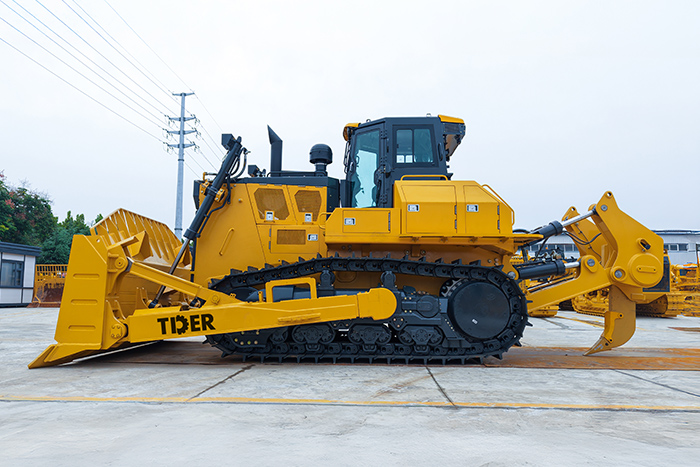
Choose the TDER TC320 when the project involves higher material volumes, demanding terrain, or greater pushing requirements. Its 257 kW Cummins engine, 280 kN maximum traction, and 10 m³ dozing capacity provide greater working capability for mining and heavy earthmoving. Ripper configurations are also available for more challenging ground conditions. This makes the TC320 a suitable Big Bulldozer option within TDER's range.
Which TDER Bulldozer Is Suitable for Large-Scale Heavy Earthmoving?
Choose the TDER TC600 when the project requires continuous heavy-duty operation and higher production capacity. Its 450 kW Cummins QSK19 engine, 18.5 m³ semi-U blade, and heavy-duty crawler configuration are designed for large-scale earthmoving, mining, and quarrying. With a single ripper, it can achieve a maximum ripping depth of 1,435 mm.
Overall, the selection should follow the project requirement: TC160 for general earthmoving, TC320 for mining and heavy earthmoving, and TC600 for large-scale heavy-duty work.
8. FAQs
What are the main types of bulldozer blades?
Common bulldozer blade configurations include S-blades (Straight blades), U-blades (Universal blades), and SU-blades (Semi-U blades). An S-blade is suitable for controlled pushing, grading, and general earthmoving. A U-blade has curved side wings that help retain larger volumes of material, making it suitable for moving loose material over longer distances. An SU-blade combines features of both and can provide a balance between material capacity and pushing control.
Which bulldozer blade is suitable for general earthmoving?
For general earthmoving, site preparation, and grading, a straight-tilt blade can provide a practical balance between pushing and blade control. The right choice still depends on the material and working conditions. For applications requiring higher material-carrying capacity, a larger-capacity or semi-U blade may be more appropriate.
What is the difference between a crawler bulldozer and a wheel bulldozer?
A crawler bulldozer uses tracks to provide greater ground contact, traction, and stability, making it suitable for soft, uneven, or demanding terrain. A wheel bulldozer uses tires and can offer higher travel speed and easier movement between working areas. For difficult ground conditions and heavy pushing, the tracked configuration is generally the more relevant option to consider.
When should I choose a Big Bulldozer?
A Big Bulldozer is worth considering when the project involves high material volumes, demanding ground conditions, long pushing cycles, or continuous heavy-duty work. Compare the required productivity with the machine's operating weight, blade capacity, traction, and transportation requirements before choosing a larger machine.
Do I need a ripper on a bulldozer?
A ripper is useful when the bulldozer needs to break or loosen hard-packed, frozen, rocky, or otherwise difficult ground before pushing. If the working material is already loose and easy to move, a ripper may not be necessary. TDER offers ripper configurations on selected bulldozer models, so the requirement should be confirmed according to the project conditions.
What should I check before buying a bulldozer?
Confirm the application, ground conditions, operating weight, engine power, blade type and capacity, undercarriage configuration, traction, ripper requirement, fuel consumption, spare parts, and after-sales support. Comparing the complete configuration is more useful than choosing a machine based on horsepower alone.
9. Conclusion
Choosing the right bulldozer means matching the machine to the application, ground conditions, workload, and operating requirements. The right balance of size, configuration, productivity, and operating cost is more important than simply choosing the most powerful machine.
With different bulldozer capacities and configurations, TDER provides new machine solutions for a wide range of earthmoving requirements, from general site preparation to heavy-duty mining and large-scale earthmoving.